Without circuits
Complex current distribution in inductors and transformers can lead to non-convergence while solving, especially at higher frequencies. This is common when solving for imported solid multi-turn windings at high frequencies, where the skin depth is significantly smaller than the wire cross-section (or trace width, in case of planar inductors).
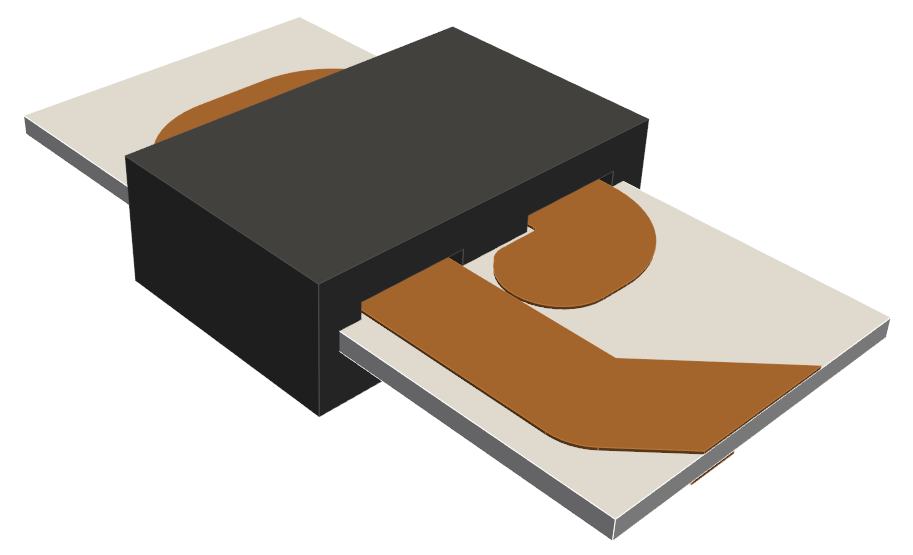
The convergence can be improved by skipping circuits with the Without circuits option in TRAFOLO. This is done by applying voltage directly to the winding terminals, bypassing the need for circuit connections.
Existing Limitations
This method, however, possesses some limitations:
- Full domain type simulations only. Symmetric domain types are not supported.
- Inductance simulation type only.
- One source only
- Voltage excitation only. It does not allow solving with current excitation.
- One phase only. Three-phase simulations are not supported.
Model setup
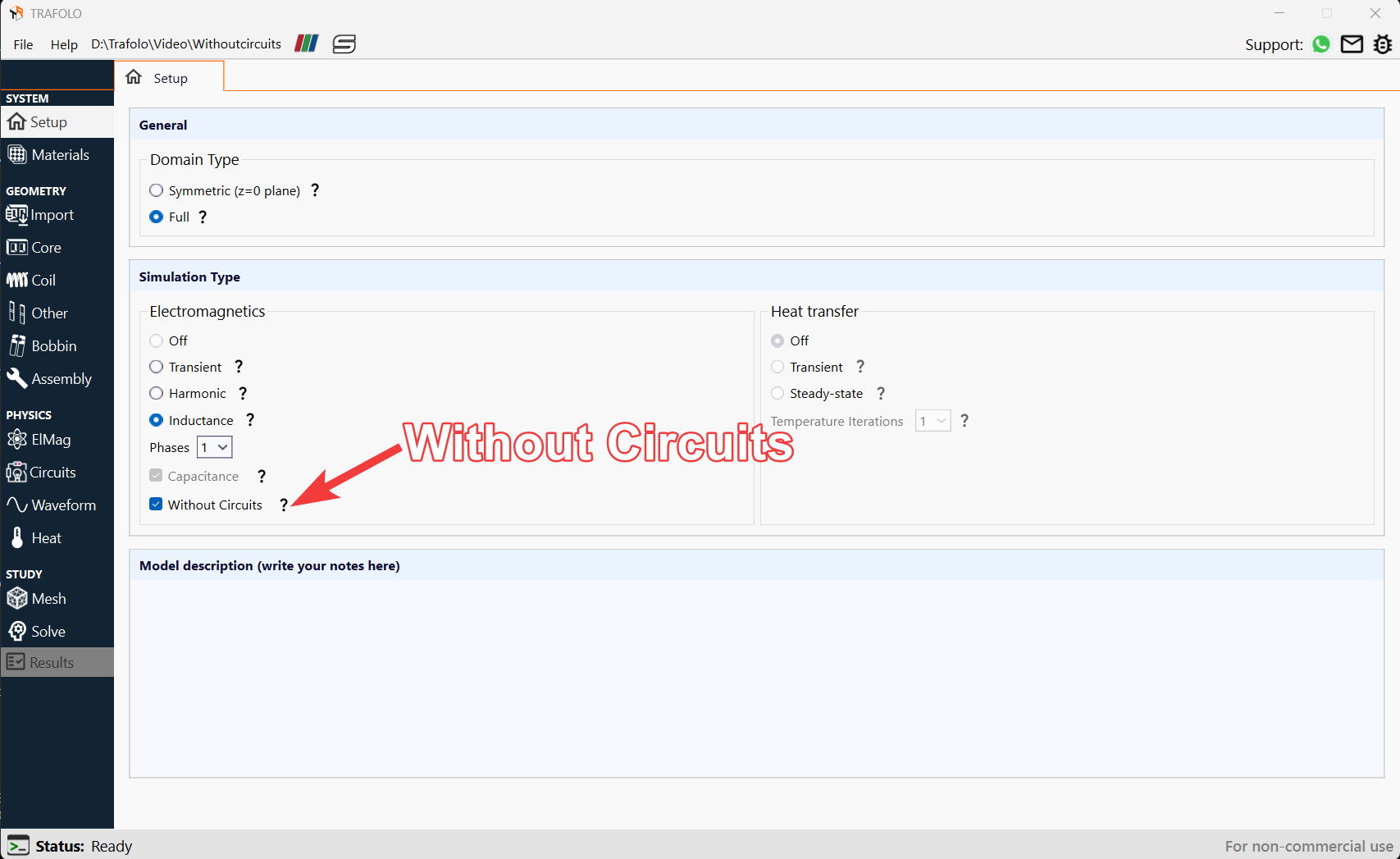
By selecting Without Circuits in the Setup tab, the solver will ignore circuits and only apply voltage to external terminals.
Excitation and connection
Excitation and connection between windings and winding turns are limited. In Primary Winding, the Excitation is set to Urms[V] by default; and the user cannot change that.
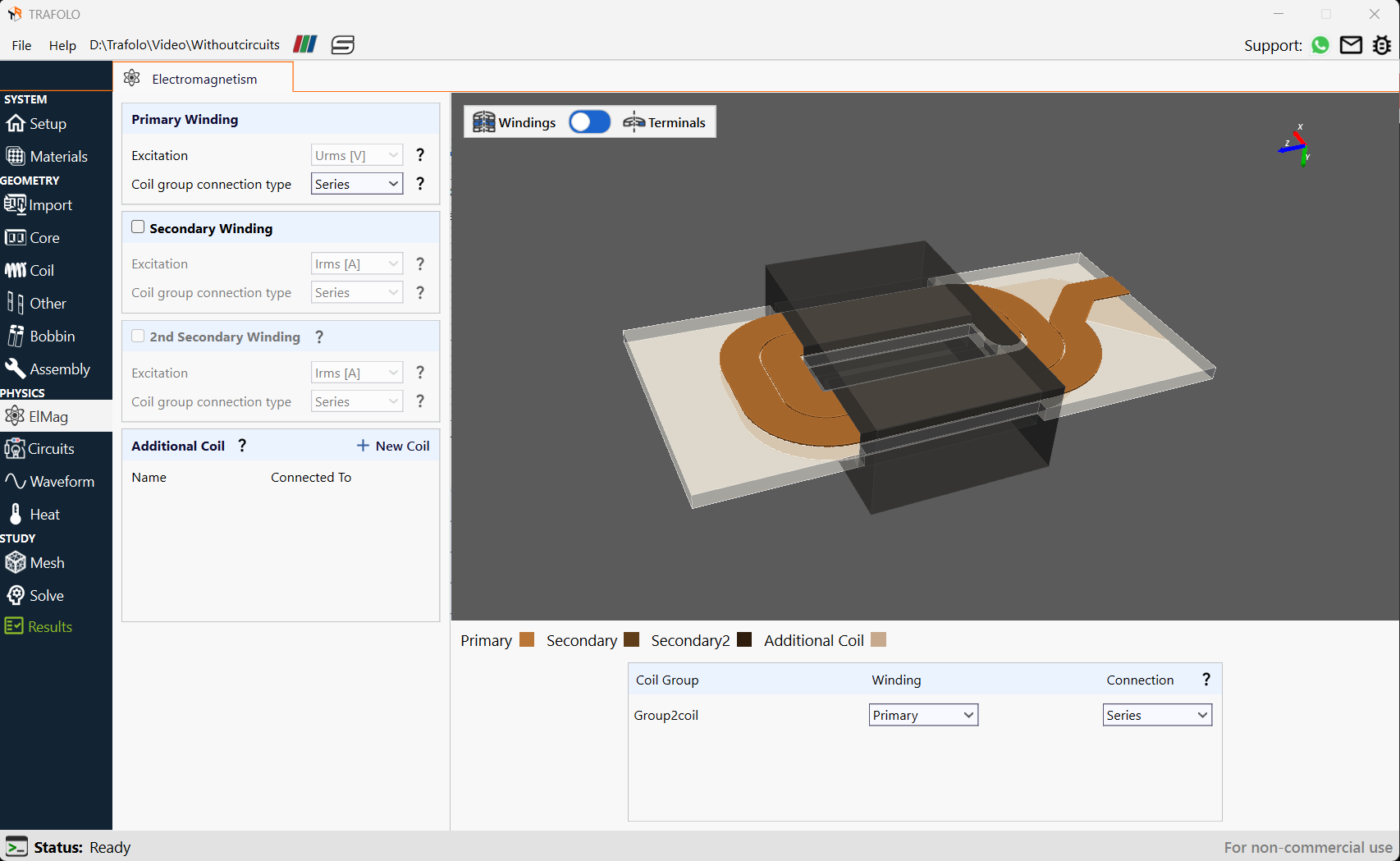
Note that in simulations without circuits, connections within and between coil groups will not function. By default, the Without Circuits setting connects all geometries within the same winding in parallel.
Result Analysis
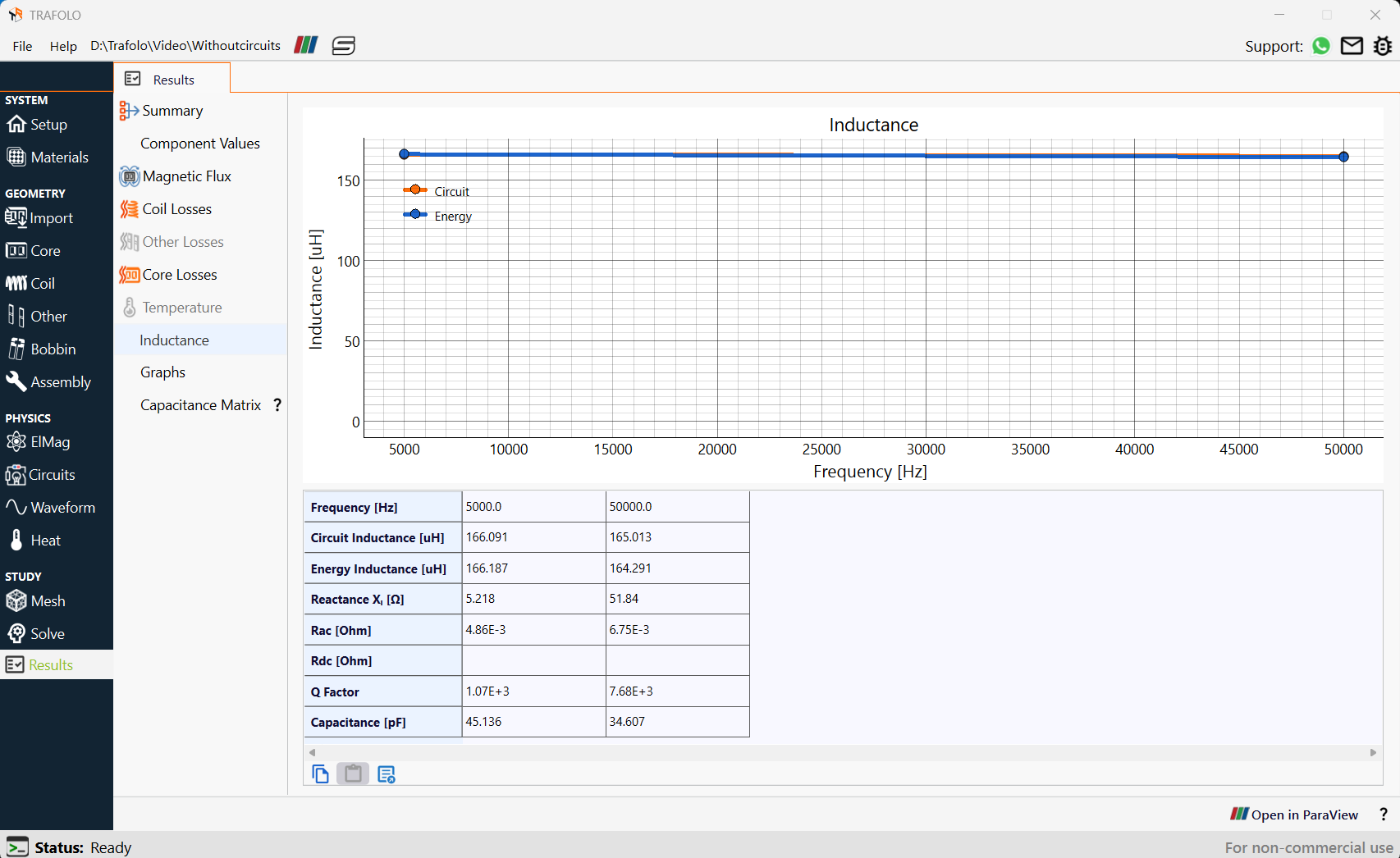
The results' structure will remain unchanged, with the only difference being the absence of Rdc compared to circuit-based results. To obtain Rdc without circuits, perform a simulation at 0 Hz frequency.
Related info
- Planar Inductor template.